 |
The SKIRT project
advanced radiative transfer for astrophysics
|
|
The SKIRT project
advanced radiative transfer for astrophysics
|
#include <AbstractItemPropertyHandler.hpp>
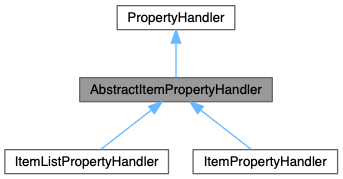
Additional Inherited Members | |
| Protected Member Functions inherited from PropertyHandler | |
| const PropertyDef * | property () const |
| void | setChanged () |
| Item * | target () const |
AbstractItemPropertyHandler serves as an abstract base class for handling SMILE data item properties that hold one or more pointers to other SMILE data items.
Returns a list of item types, in order of addition to the item registry, which inherit the base type of the target item and which are allowed and should be displayed for the current dataset configuration. For each candidate type, the function obtains a compound conditional expression by concatenating the "allowedIf" and "displayedIf" attribute values for that type and for any of its base types, recursively, with the AND operator into a single Boolean expression. After replacing names currently present in the global or local name sets by true, and other names by false, it then evaluates this expression to determine whether the type is to be included in the returned list.
| string AbstractItemPropertyHandler::baseType | ( | ) | const |
Returns the base type of the item being pointed to by the handled property.
| string AbstractItemPropertyHandler::defaultType | ( | ) | const |
Returns the default type for the handled property, or empty if unavailable.
|
overridevirtual |
Returns true, indicating that the handled property type is compound, i.e. it aggregates other items that are part of the item hierarchy.
Reimplemented from PropertyHandler.
|
overridevirtual |
Returns true if the given string can be successfully converted to a value of the property's type. For item and item list properties, the function returns true if the string matches the type name of one of the currently allowed descendants, and false otherwise.
Implements PropertyHandler.
|
delete |
Constructs a property handler for the specified target item and property, with a given schema definition.
| PropertyHandler::PropertyHandler | ( | Item * | target, |
| const PropertyDef * | property, | ||
| const SchemaDef * | schema, | ||
| NameManager * | nameMgr ) |
Constructs a property handler for the specified target item and property, with a given schema definition.